
Continuum — an operational resilience platform by Resiliency
What Continuum does
One platform for the whole resilience programme: the plans, the people, the evidence — and the operations room for the day it all matters.
Continuity planning
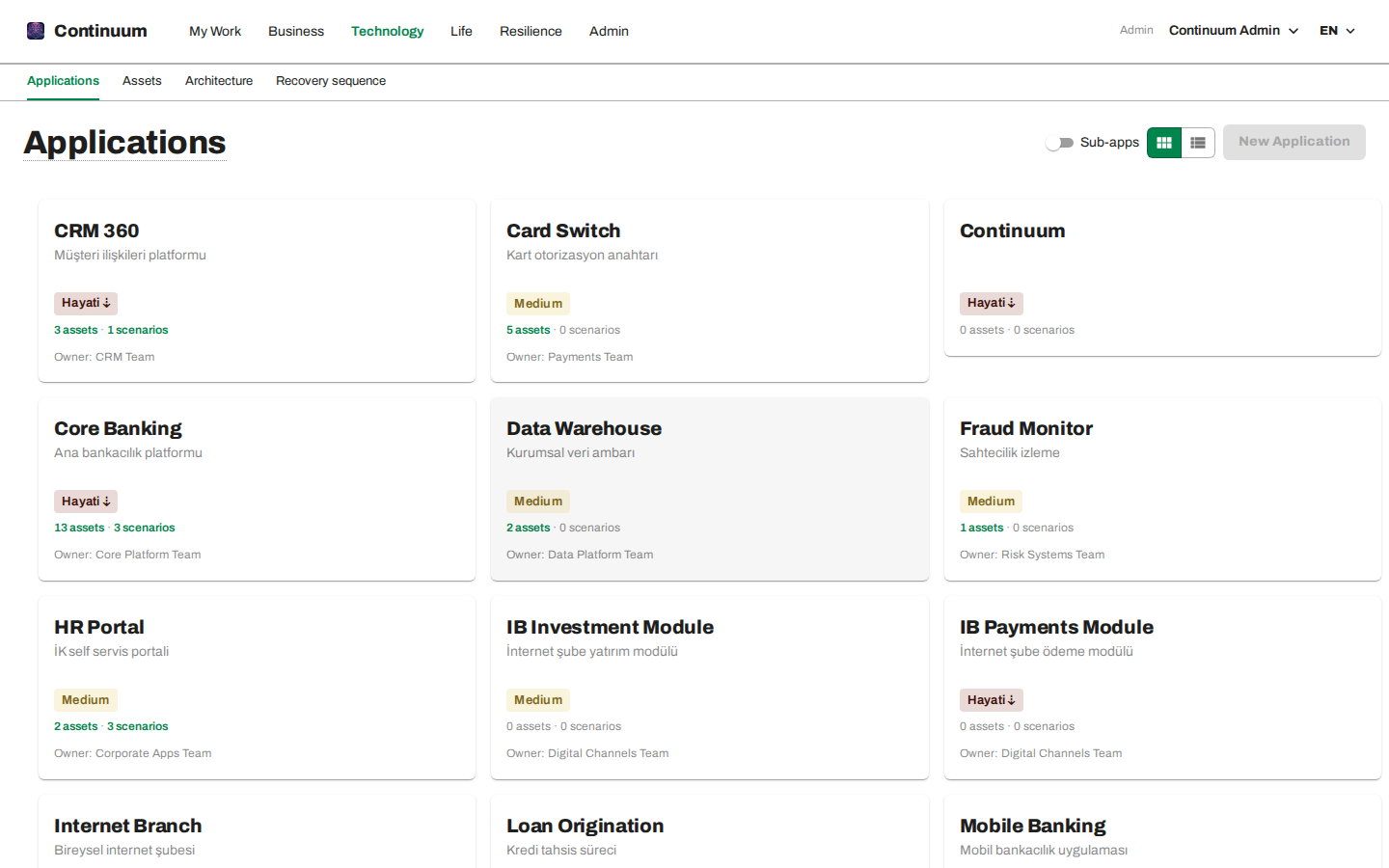
Plans are built from steps with real dependencies, so the critical path is computed, not asserted: every application shows its RTO next to the calculated recovery time, and when the math says you won't make it, you see it before the incident does. Every change walks draft → approval → publish, with version history and restore.
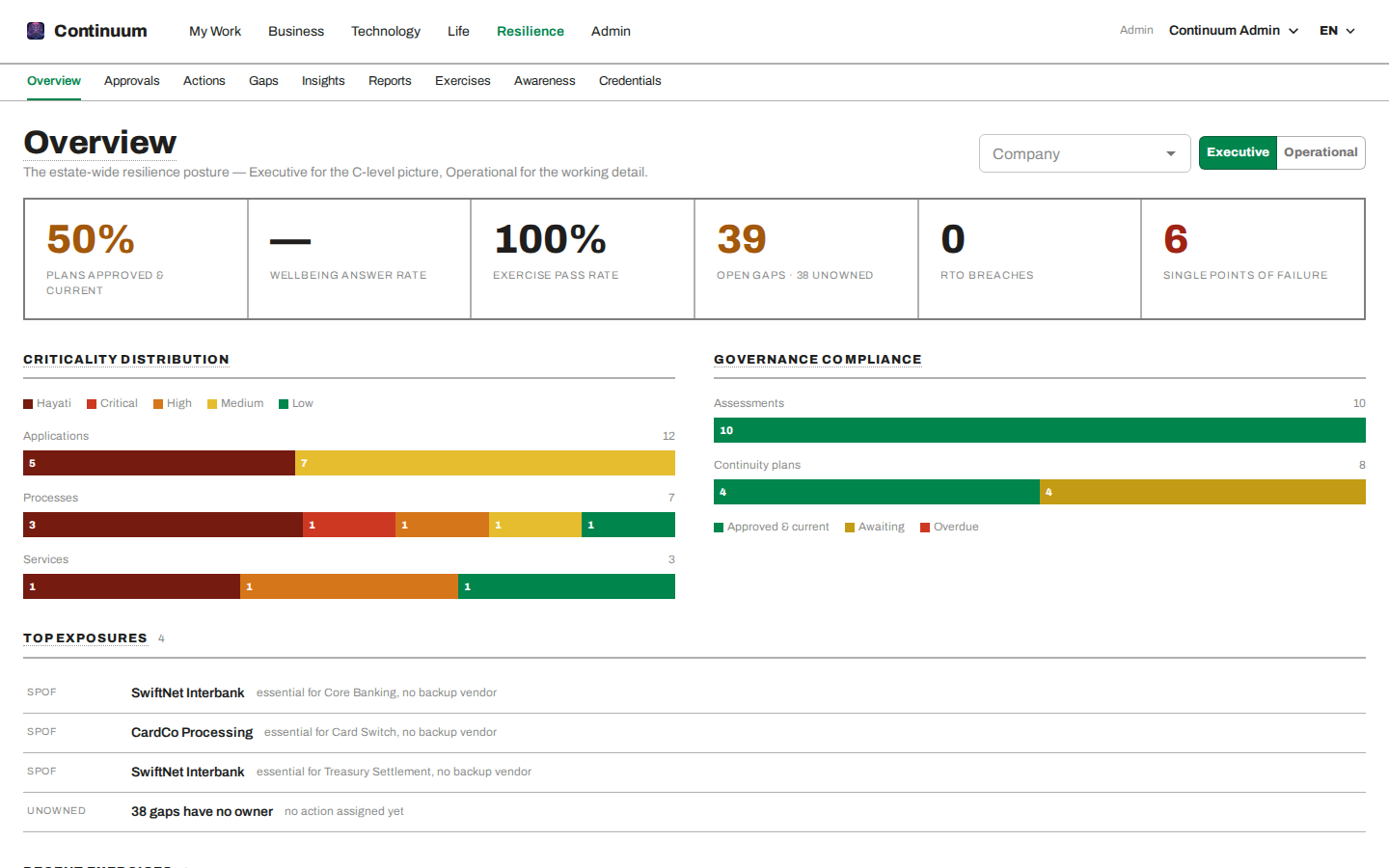
One overview that tells the truth
The dashboard rolls up plans, coverage, gaps and waiting approvals without decoration — normal is quiet, only problems carry color. Readiness rules compute gaps continuously (a missing assessment, an overdue review, an unexercised plan) and each gap can become a tracked action with an owner.
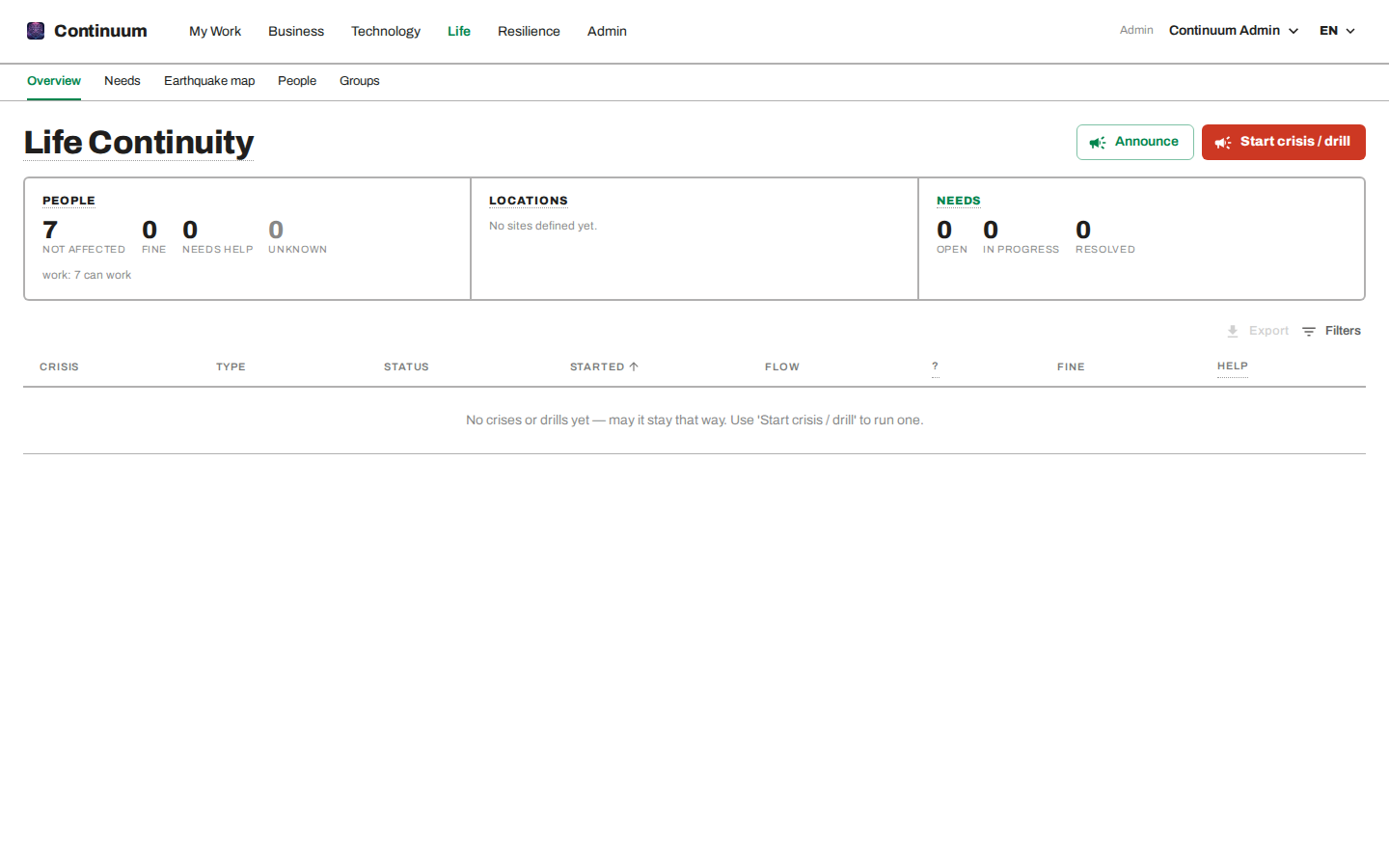
Crisis & Life operations
When something happens, Continuum asks every affected person whether they're okay — over SMS, WhatsApp and push, in escalation waves that end at emergency contacts if nobody answers. Replies come back over the same channels; a need opens a pipeline that stays visible until it's resolved. Earthquake feeds can open a crisis by themselves.
Assessments that stay honest
Criticality is scored from questionnaires, not opinion. Approved scores freeze together with the questionnaire version they answered; change a question and the affected assessments are forced back for re-answering at their next review. What a number meant when it was approved stays on record.
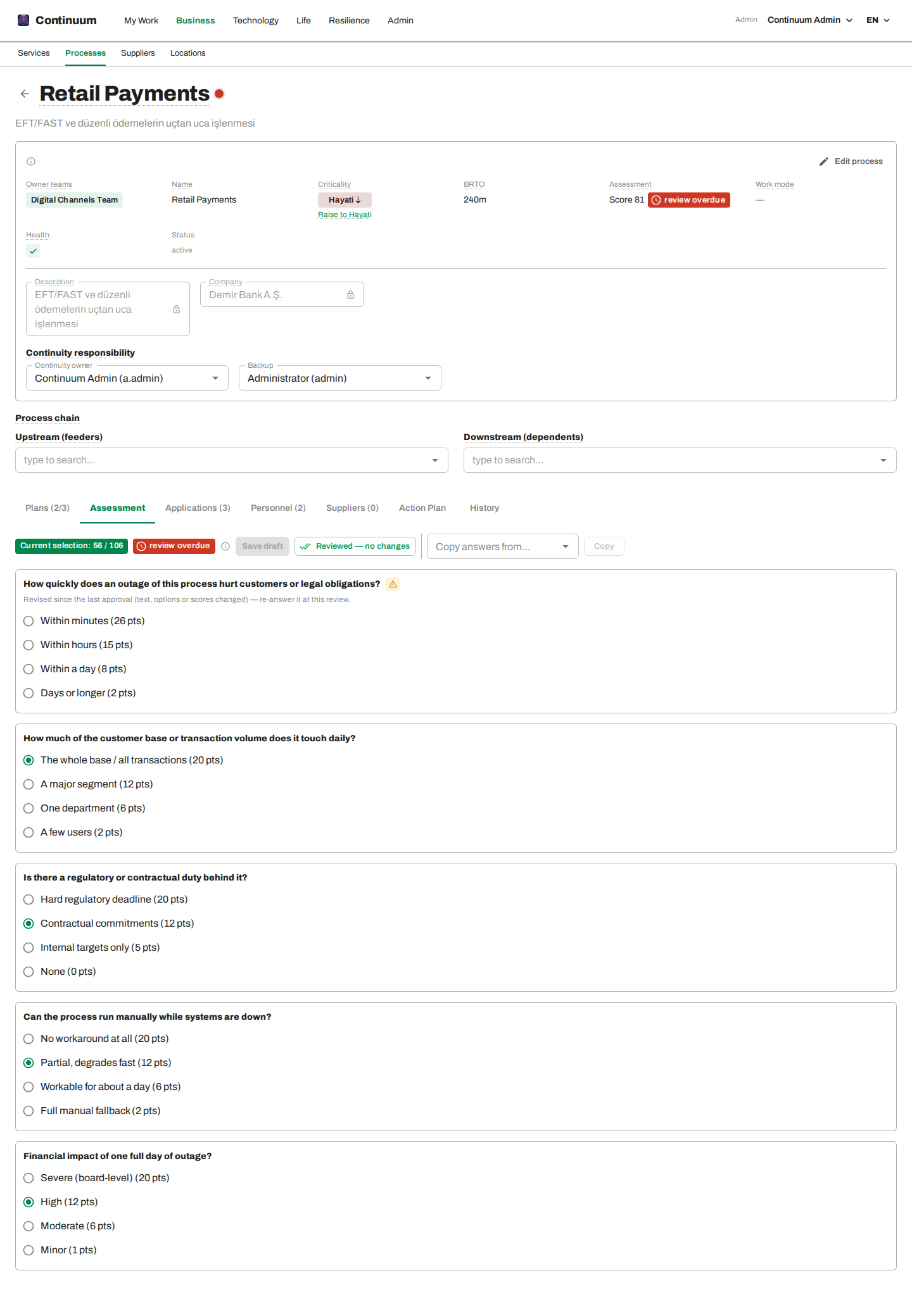
Business processes end to end
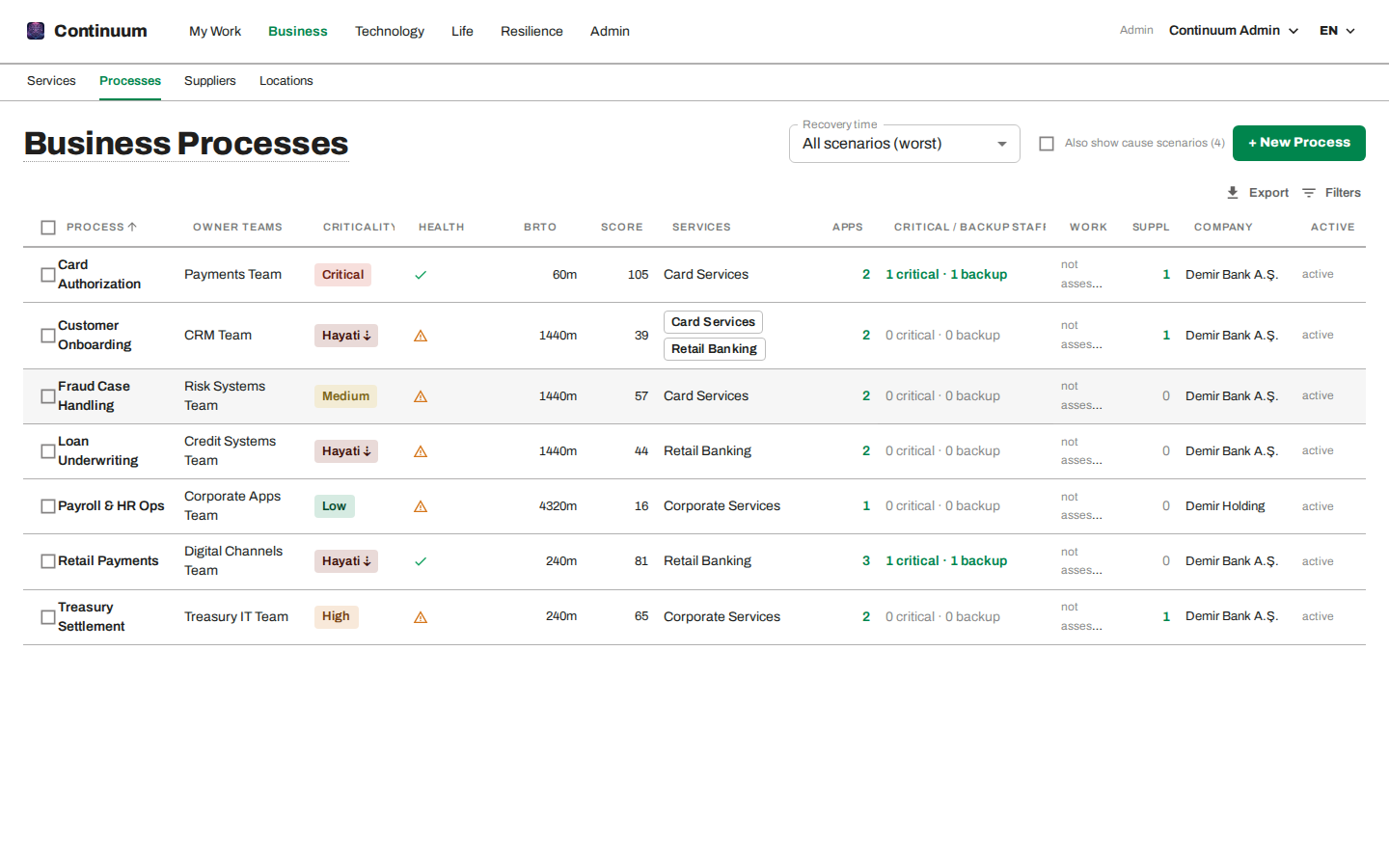
Business processes carry their own recovery target (BRTO), their staffing signals and their dependent applications and suppliers. Process plans use the same step designer and the same critical-path math as IT plans — one grammar for both sides of the house.
Built for the worst day
Instances form a replication mesh with no central coordinator, so a bunker instance stays current and keeps working alone if it has to. The change journal is hash-chained and cross-verified between peers — tamper-evident history, stated plainly, never oversold as tamper-proof. Licensing is a signed file verified offline: zero call-home, by design. Renewal can be a pull the instance starts itself — it asks https://resiliency.biz/renew whether a newer signed file exists, carrying the serial and nothing else; the vendor has no way to reach in.